









$45.00
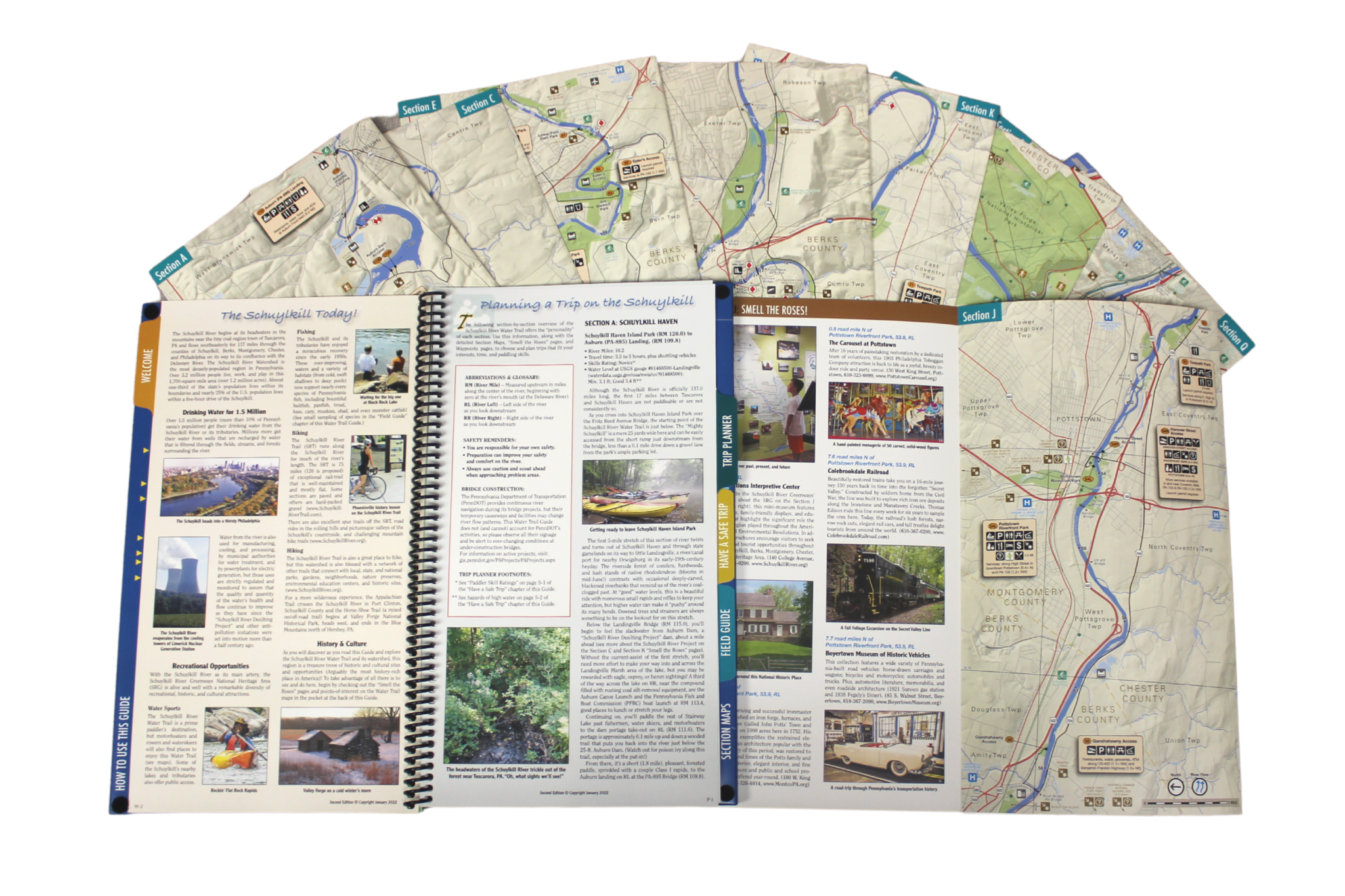
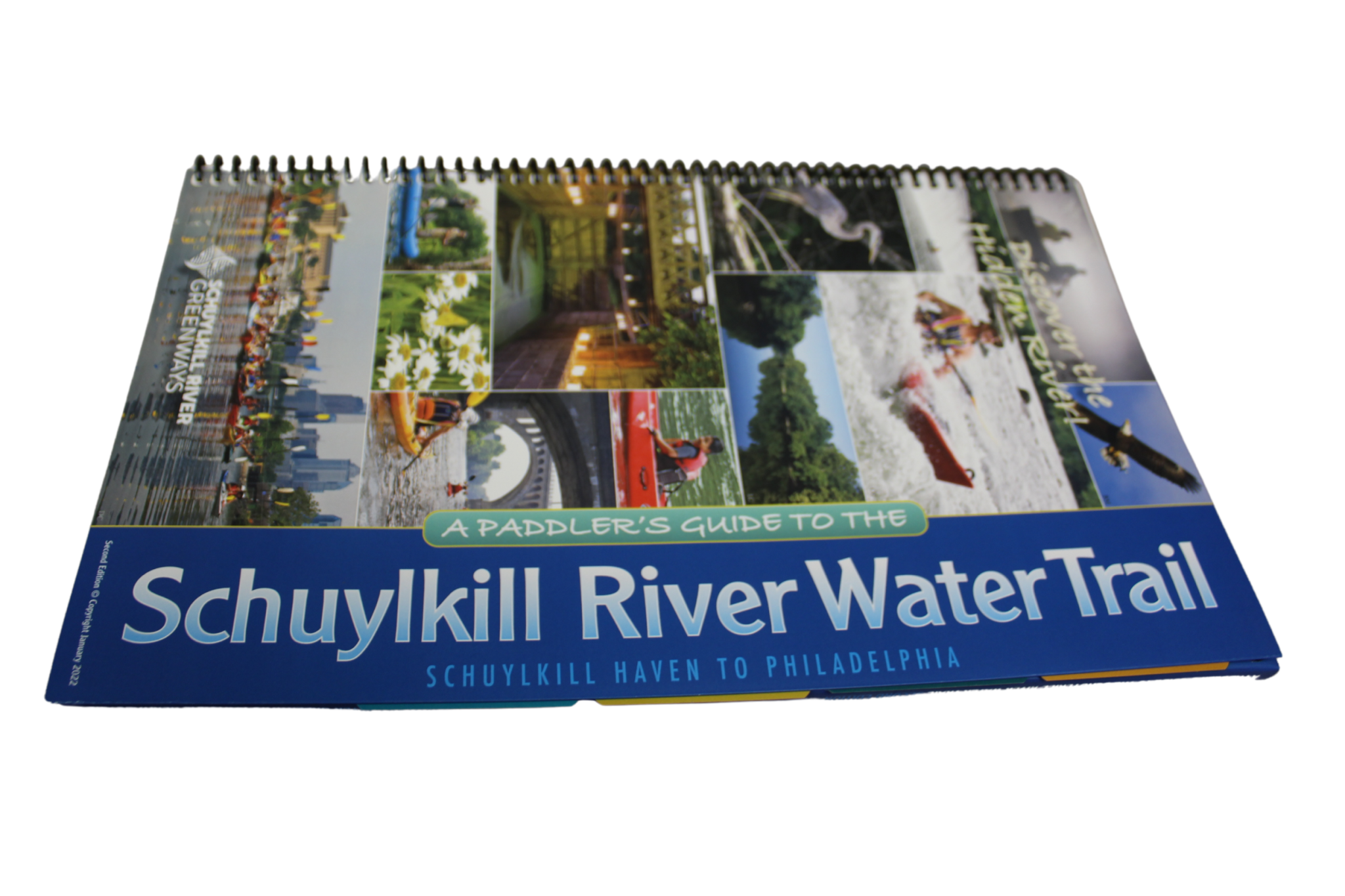
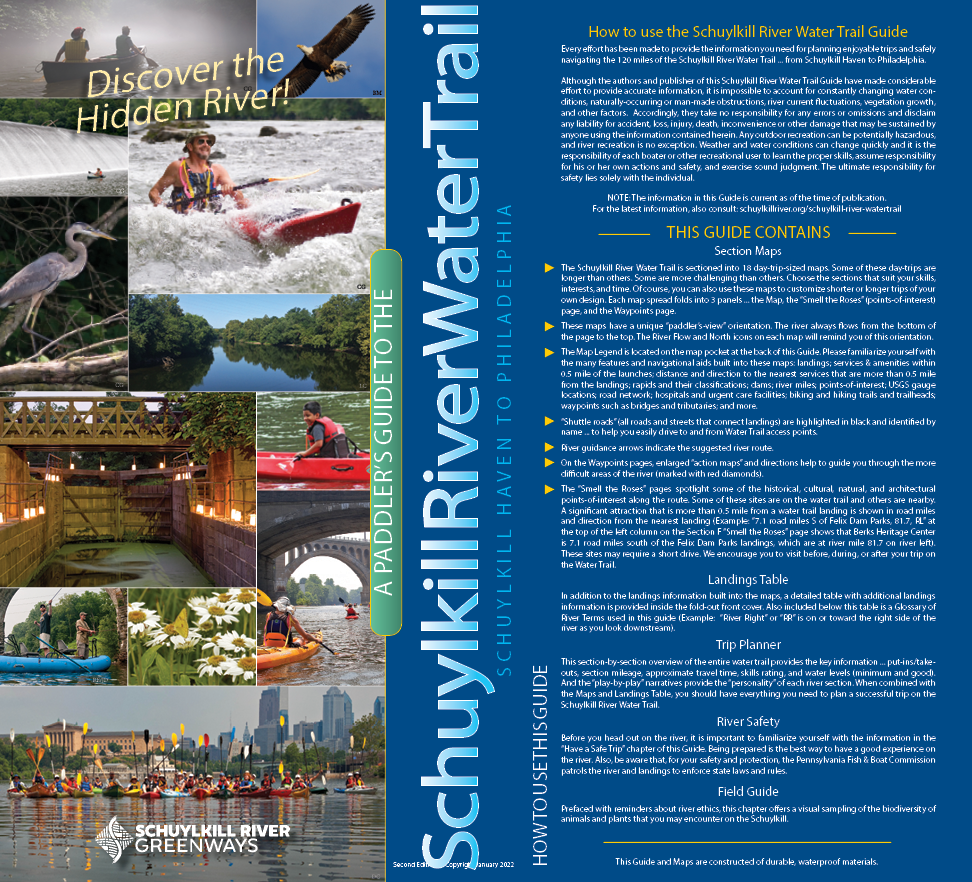
The second edition of A Paddler’s Guide to the Schuylkill River Water Trail was published in 2022. It includes all the great details, maps and information of the first edition; but with important updates including the addition of several water trail landings.
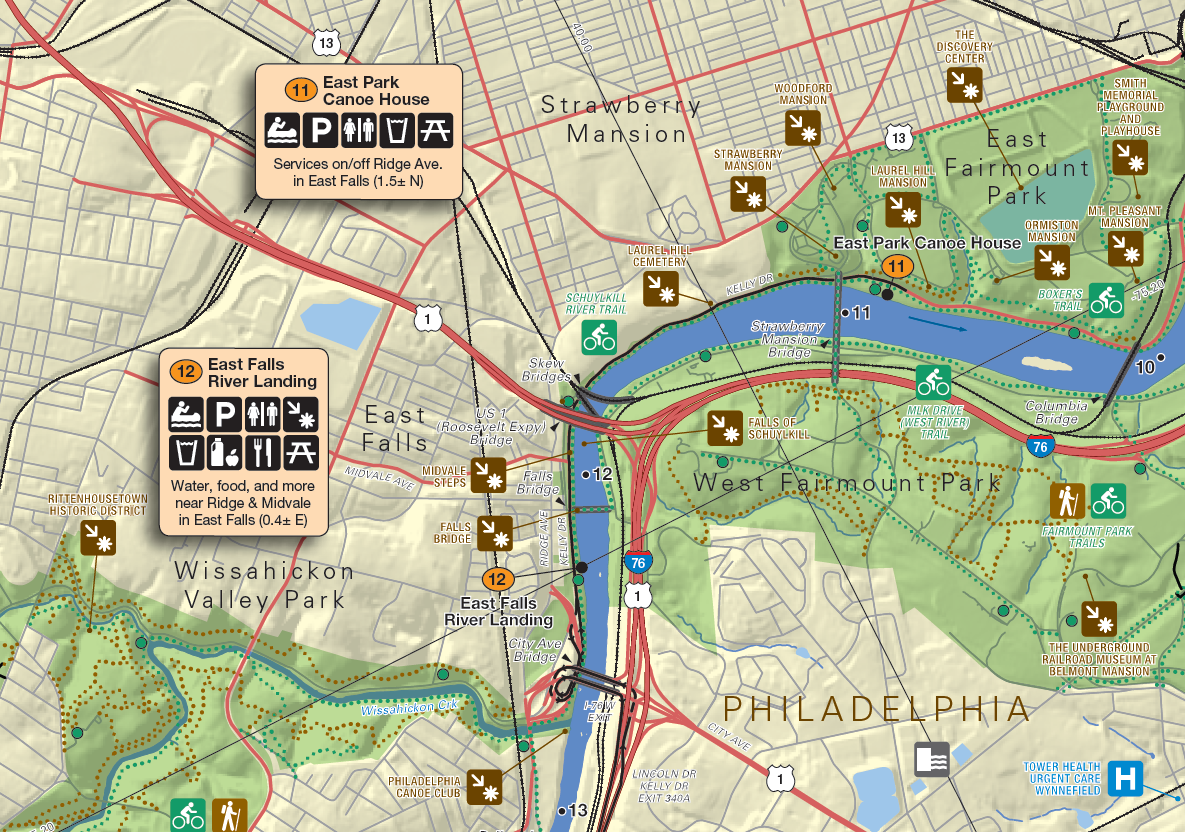
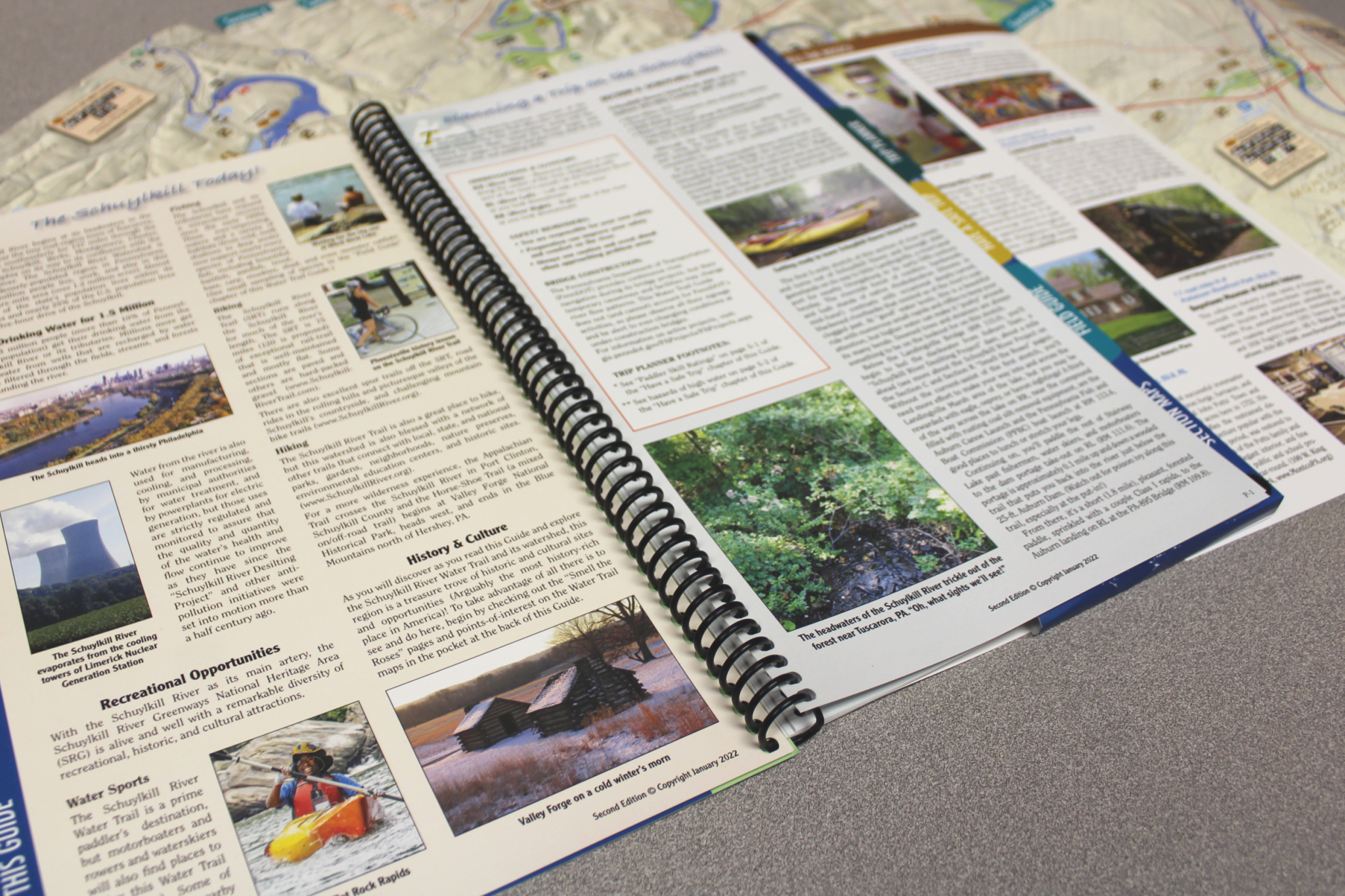
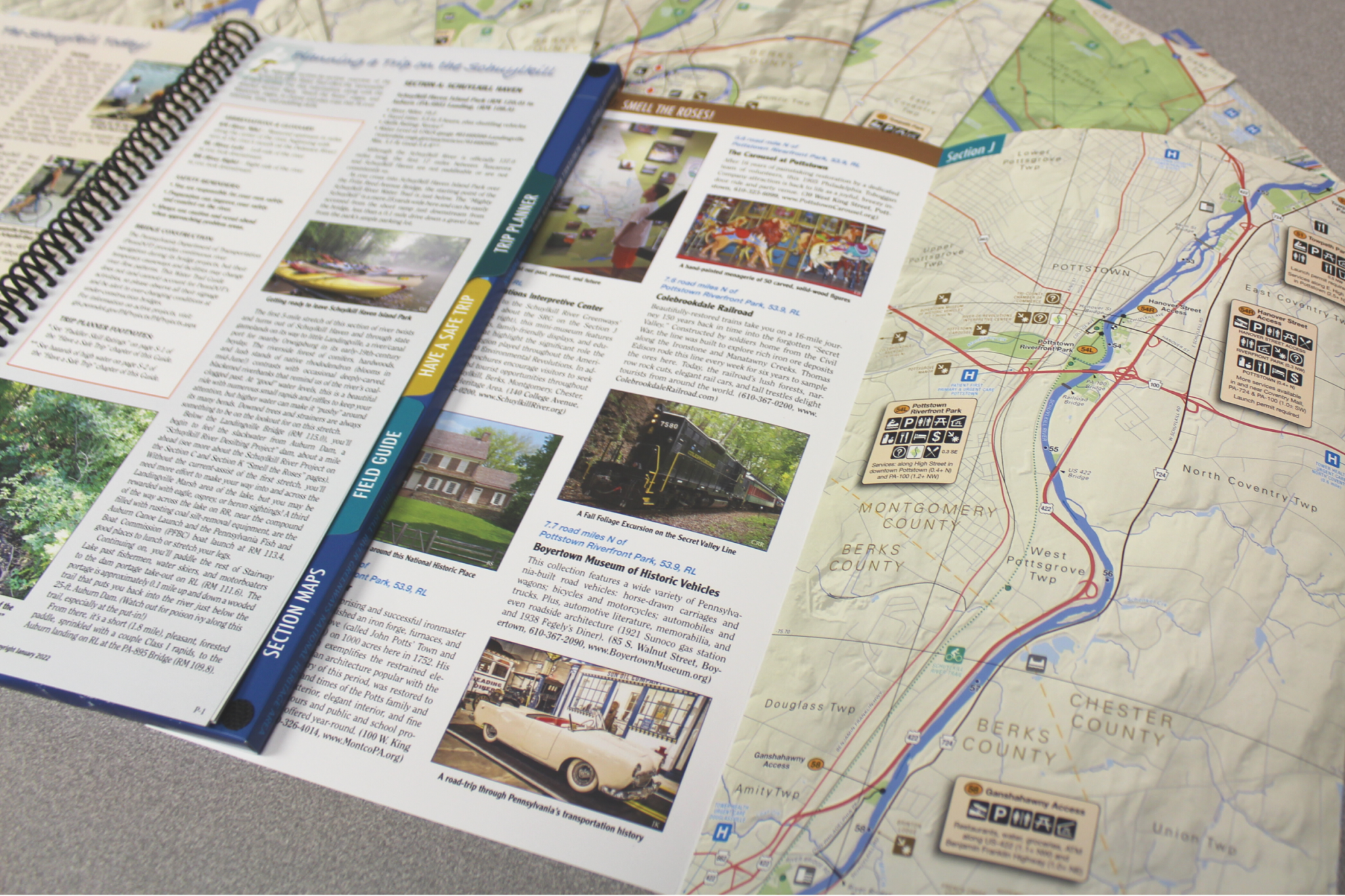
The guide consists of an informative, spiral-bound, 20-page booklet and a portfolio of feature-rich, detailed, tri-fold maps of the 18 sections of this 115-mile water trail flowing through southeastern Pennsylvania. This comprehensive guide, printed on waterproof, highly-durable synthetic stock, was written and designed to help the first-time visitor or the seasoned Schuylkill veteran discover, explore, and enjoy this remarkable river as well as its riverside communities, attractions, and significant and colorful history.
“A Paddler’s Guide to the Schuylkill River Water Trail” was published by the Schuylkill River National and State Heritage Area and designed by avid paddler Brian Swisher, with the cooperation and assistance of a host of individuals and groups from the paddling community, government agencies, environmental non-profits, community organizations, photographers, illustrators, writers, and more. We would like to acknowledge and heartily thank all those who contributed to this epic endeavor!
The First Edition of the Paddler’s Guide to the Schuylkill River Water Trail was recognized with two international awards!
The British Cartographic Society has presented the guide’s author, Brian Swisher, with two commendations that recognize excellence in thematic and printed mapping! Click here to learn more
Judges’ comments: “A thorough, usable guide for planning and executing a trip along the river – appeals to everyone with lots of associated information, clearly laid out, good clear photography and labels. Maps have all associated contextual information. A very useable guide. The map meets the intended use and portrays a lot of information to plan a river trip. Clear mapping. Good use of mapping within a wider setting – very much enhanced by the explanatory text.”
“I am unaware of any other publication that does as great a job as a guide to the water and to the area and as preparation for & encouraging of river paddling. This guide is definitely the gold standard!” Allan Quant, Former Schuylkill River Sojourn Guide and owner of Canoe Susquehanna. Released in December 2016,